Jenny and William’s correspondence
American WomanJenny and William’s correspondence is at once a lifeline and a measure of separation. Written under censorship and passed through Dana, the letters let the lovers maintain contact while William is imprisoned and Jenny is living underground, but every precaution reshapes what they can say and how their words reach each other. The exchange preserves their connection while making its limits increasingly palpable: messages cross the distance, yet can arrive altered, delayed, or returned, and the intimacy Jenny seeks seems to recede inside the very correspondence meant to protect it.
A coded channel under constraint
The correspondence begins with a small, deliberately obvious code. Jenny signs her first short note as William’s “sister,” and he answers chastely as her “brother.” In the crisis surrounding them, the shared understanding feels like a success: even without speaking plainly, they know how to keep the relationship legible to each other while concealing it from others. But that workable convention also establishes the narrowness of their channel. A code can protect a message without giving it room to say everything the writers mean.
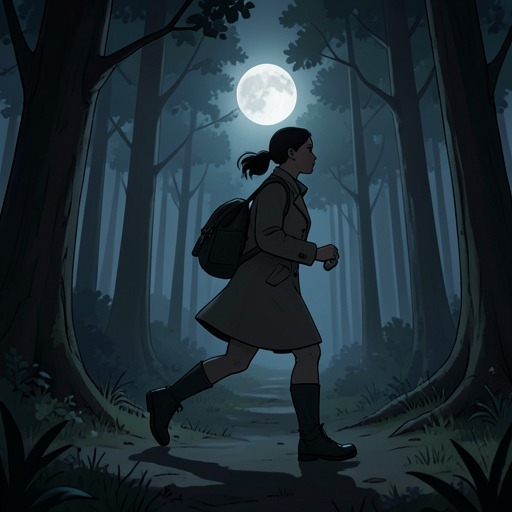
Their letters are also shaped by the prison censors and by Jenny’s concealed circumstances. After leaving Wildmoor, she repeatedly tries to finish a letter to William, only to find that she must leave out too much. She eventually abandons the unfinished draft and starts again with an account of searching for a yellow croquet ball, writing as though she were still at Wildmoor. The invented account offers no explanation of her changed situation, but Jenny hopes she can be more honest next time without giving the censors a clue they could understand. She recognizes the contradiction: protecting herself requires misleading William, even as she resists thinking of that concealment as lying.
Intimacy translated and diminished
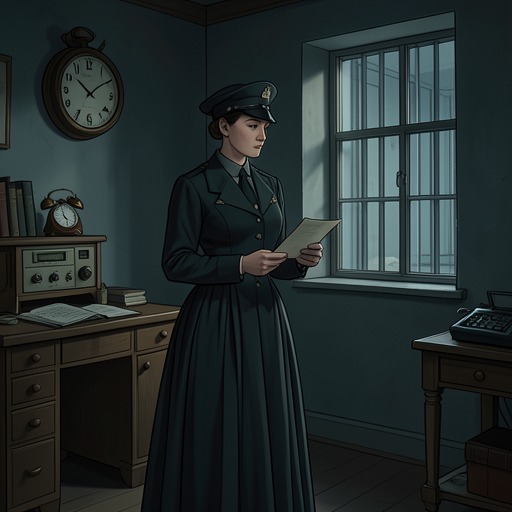
The correspondence becomes a labor of mediation as well as writing. Dana reseals William’s letters in fresh envelopes, while Jenny receives and opens them; Dana’s slanting, regular handwriting also transcribes Jenny’s messages. Jenny’s own letters are marked by pointy, insistent block letters, underlining, and loud exclamations. In Dana’s copies, those particular signs of Jenny’s voice are ironed out. Jenny suspects that something of her love goes with them, as if it evaporates in transcription.
William’s letters have their own recognizable presence: his upright, carefully formed handwriting, which Jenny associates with notes on a staff. Yet their tone seems measured by the constraints of the exchange. One letter tells her that he loves her, that he is finding good work to do, and that he has been thinking about zealots. His words refer to comrades whose activities Jenny follows in the news, while she is in a house with those same people and cannot disclose that fact to him. The irony sharpens her guilt: a remark that once irritated her for its pompous phrasing now touches the concealed reality of her own life.
Jenny does not believe the letters prove that their love is lacking. They had never needed to write to each other before William’s arrest, and she considers that they may simply lack the practice. Still, she believes in the romance of letters and searches William’s messages for a bodily, intimate presence that the written exchange cannot quite supply. She imagines their bedroom in Berkeley, the open windows, and the old Salvation Army mattress that had softened into a dent beneath them. When she recalls details of William’s body, she is startled by how quickly they have faded. The letters preserve memory, but they cannot substitute for the person whose physical presence Jenny is trying to remember.
The letter as an object of attachment
The physical things surrounding the exchange give it a weight that its coded phrases cannot. Jenny keeps William’s letters in a battered brown accordion file, once rescued from the trash in Dick and Helen’s apartment. It bears the large scrawl Tax Yr ’64, and its limp ribbon is stretched around a growing stack of papers. Opening a letter exposes her to disappointment; putting it away can let her feel William more fully again, as she turns from the paper to memories of their shared life. The file is not just storage: it holds a fragile, accumulating record of intimacy that Jenny fears may outgrow its fastening.
The correspondence also gives the novel a form for distance. Jenny knows the letters can be no more than indications, like puffs of smoke from opposite sides of a canyon. Their exchange is neither a complete account of either life nor a transparent window into the other person. Each message is composed for a particular recipient under conditions that force omission and disguise. Jenny’s effort to be honest with William therefore produces a divided message: what she can write, what she must suppress, and what she hopes he will understand without being told.
Interruption and attempted continuation
The cost of that distance becomes immediate during Jenny’s weeks in Liberty, where she drives into town each day partly to escape the others and mostly because she expects a letter. When something finally appears in the mailbox, the densely written, repeatedly folded paper seems familiar enough that she initially mistakes it for a message from William. It is her own letter, returned. Dana has enclosed a note telling Jenny not to write or send anything more and saying that she has moved.
Jenny’s response is a sequence of efforts to restore contact. She drives away quickly, waits for a businessman to leave a pay phone, and repeatedly calls Dana. At first there is no answer; after Jenny has waited in a small park and returned to the phone, the line finally opens. Dana explains that the material Jenny sent made her very sick: people at the location where she left it had been examined repeatedly, and then they found Dana. The failed route for communication has brought danger as well as disappointment, and the two women’s conversation quickly turns to blame and Jenny’s involvement.
The correspondence does not simply end there. Unable to explain her location to William, Jenny writes again, this time on a borrowed typewriter, and conceals the letter behind a book. She asks Frazer to send it onward, possibly through someone in Mexico, so it can reach William without exposing her. Frazer turns the thick letter over in his hands, asks whether Dana recopied it, and understands that Jenny typed it on the others’ typewriter. Although the request arrives amid his anger about the tape she sent, he agrees to do his best. When the wind threatens to carry the letter out of his car window, Jenny warns him; Frazer puts it in the glove compartment among his maps. The small act of securing the paper gives the attempted message a provisional future, but not a guarantee of delivery. Throughout the correspondence, the difference between a letter written and a letter received remains the difference between wanting contact and being able to reach someone.